

By Annabel Sparano, Youth Advisory Council member.
The following reflects Annabel’s lived experiences, thoughts, and opinions.
My interest in medicine first drew me into spaces where healthcare inequity is impossible to ignore. Through volunteer work and involvement in healthcare organizations, I’ve encountered families facing preventable illnesses, food pantries filled with children, and substance-abuse summits where those most affected came disproportionately from disadvantaged communities. While volunteering at charity care clinics, I met patients who were months, sometimes years behind on treatment because cost, limited access, and scarce resources stood between them and care. Growing up near New York City, I witnessed how deeply racial and socioeconomic disparities are embedded in the American healthcare system. My father, a physician, often reminds me that health is the foundation of everything else in life. I believe access to quality healthcare should reflect that reality. That conviction drives my work in artificial intelligence, not as a purely technological pursuit, but as a means to confront and correct the inequities I have witnessed firsthand.
AI is transforming healthcare at a remarkable pace. Particularly important is its potential impact on health equity, where it may function as a double-edged sword. When AI systems are trained on datasets that predominantly feature homogeneous patient populations (eg, over-representation of white patients with good insurance profiles), they can perpetuate diagnostic biases and deliver unfair treatment to vulnerable communities. These gaps in representation can vary in severity, but even small biases can lead to disproportionate harm.
Conversely, if dataset management and associated modeling are handled responsibly, AI holds great potential to address current healthcare inequities. Additionally, precision medicine is advancing, and AI is enabling personalized treatment plans accounting for individual genetic, environmental, and lifestyle factors, improving care quality for all populations, including those previously left behind. Besides the potential to close equity gaps, AI is making healthcare more cost-effective for all communities by streamlining administrative tasks, reducing diagnostic errors, and optimizing resource allocation, while also saving time through faster analysis of medical imaging and patient data.
I have witnessed AI’s potential firsthand through research experiences. I developed AI-driven models to classify colorectal tissue samples as malignant or benign using histology images. In this way, the new technology sharpened diagnostic accuracy and did so in a more expedited fashion. This past summer, I compared the performance and interpretability of various machine learning models in detecting early pancreatic cancer. The work was fascinating and reinforced my belief that AI will lead to more personalized and efficient care, ultimately saving lives.
However, these experiences also reminded me of a critical lesson—the importance of dataset diversity. While training these models, I recurrently considered whether the patient data truly represented diverse communities—so the models could be applied responsibly and accurately. Without diverse, representative datasets, even the most sophisticated AI systems risk deepening existing healthcare disparities.
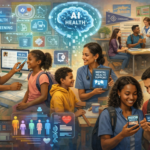
School-based health centers (SBHCs) are uniquely positioned to leverage AI while prioritizing equity. SBHCs can implement AI-powered chatbots and online resources that provide students with immediate, applicable health information and mental health support, available 24/7. These tools can offer multilingual support, making care more accessible to students from diverse linguistic backgrounds. Sophisticated applications of AI can help SBHCs identify students at risk for chronic conditions through predictive analytics, enabling earlier, more targeted intervention. Additionally, telehealth platforms enhanced with AI can expand access to specialists, particularly important for rural or under-resourced schools. In short, AI can bolster the impressive support SBHCs already provide, improving the magnitude of resources and quality of care for disadvantaged communities.
As we embrace AI in school-based healthcare, we must remain vigilant about equity. By prioritizing the inclusion of comprehensive and diverse datasets, pursuing transparent algorithms, and maintaining student-centered designs, SBHCs can harness AI not just as a technological advancement, but as a genuine tool for meaningful progress—ensuring students receive the personalized, timely care they deserve.